
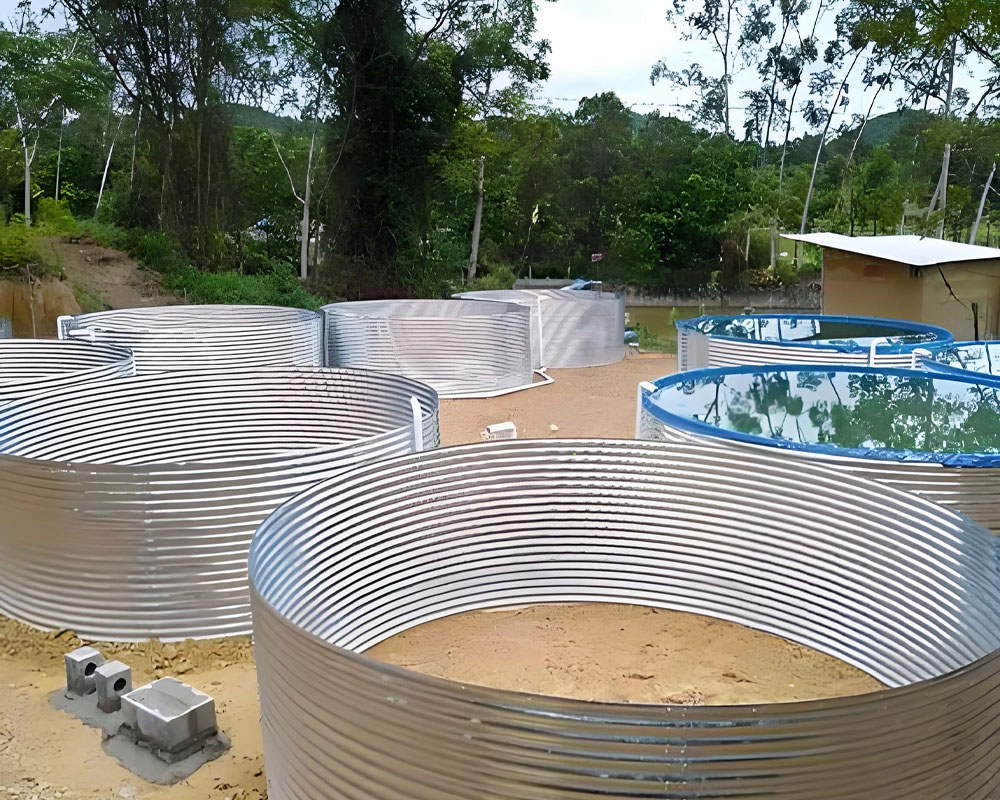
Corrugated steel water tanks can be used for fish farming (aquaculture), but with certain considerations to ensure they are suitable and safe for aquatic life. These tanks are cost-effective, durable, and versatile, making them a popular choice for small to medium-scale aquaculture operations.
✅ Uses of Corrugated Steel Water Tanks in Fish Farming
1. Rearing Tanks
- Used to raise fish from fingerlings to market size.
- Tanks can be placed above ground or partially buried depending on climate and site conditions.
2. Nursery Tanks
- Smaller tanks are ideal for housing and monitoring young fish before they are moved to larger grow-out tanks.
3. Broodstock Tanks
- Used to keep breeding fish. These tanks are usually larger and may include environmental controls to simulate natural breeding conditions.
4. Water Storage and Recirculation Systems
- Tanks can be used to store and treat water for recirculating aquaculture systems (RAS).
- They can also serve as settling or biofiltration tanks in water treatment loops.
✅ Advantages of Using Corrugated Steel Tanks for Fish Farming
| Benefit | Explanation |
|---|---|
| Durability | Corrugated steel is strong and resistant to weather and wear. |
| Affordability | Cheaper than concrete or fiberglass tanks. |
| Quick Setup | Prefabricated panels allow for fast installation. |
| Customizable Size | Tanks can be built in various diameters and heights. |
| Easy to Maintain | Smooth inner lining allows for easy cleaning and disinfection. |
⚠️ Important Considerations for Fish Farming Use
1. Lining and Coating
- Must be lined with a fish-safe liner (e.g., EPDM rubber, PVC, or FDA-approved liners).
- Galvanized steel can leach zinc and other metals harmful to fish.
- Ensure the coating or liner is non-toxic, UV-resistant, and leak-proof.
2. Water Quality Management
- Steel tanks can retain heat more than other materials, which may affect water temperature.
- Proper aeration, filtration, and temperature control systems are essential.
3. Drainage and Cleaning
- Design the tank with a central drain and sloped bottom to facilitate waste removal.
- Regular cleaning is crucial to prevent ammonia buildup and maintain fish health.
4. Regulatory Compliance
- Check local regulations regarding aquaculture systems, water use, and discharge.
- Ensure all materials used are approved for contact with aquatic life.
🐟 Common Fish Species Raised in Corrugated Steel Tanks
- Tilapia
- Catfish
- Trout
- Barramundi
- Bluegill / Sunfish
- Hybrid Striped Bass
These species are often farmed in controlled environments where water quality and feeding can be closely monitored.
🛠️ Recommended Setup for Fish Farming in Corrugated Steel Tanks
- Tank Size: 2,000 to 10,000 gallons (adjust based on fish species and scale).
- Liner: PVC or TPU liner.
- Filtration System: Mechanical and biological filters.
- Aeration: Air stones, blowers, or water pumps to maintain oxygen levels.
- Water Exchange: Partial water changes or recirculation system.
- Shading: Provide shade in sunny areas to prevent overheating.
📌 Summary
| Feature | Corrugated Steel Tank for Fish Farming |
|---|---|
| Material | Galvanized steel with fish-safe liner |
| Use | Rearing, nursery, broodstock, water storage |
| Size | Customizable (typically 2,000–50,0000 gallons) |
| Liner Required | Yes (PVC, or other non-toxic material) |
| Best For | Small to medium aquaculture operations |
| Maintenance | Regular cleaning, water testing, and inspection |
If you’re planning to set up a fish farming system using corrugated steel tanks, I can help you calculate the right size, recommend suitable liners, or guide you in setting up a recirculating aquaculture system (RAS). Just let me know your goals and location!