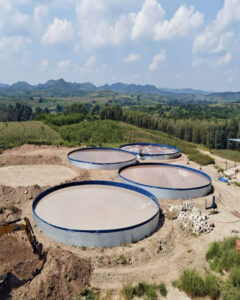
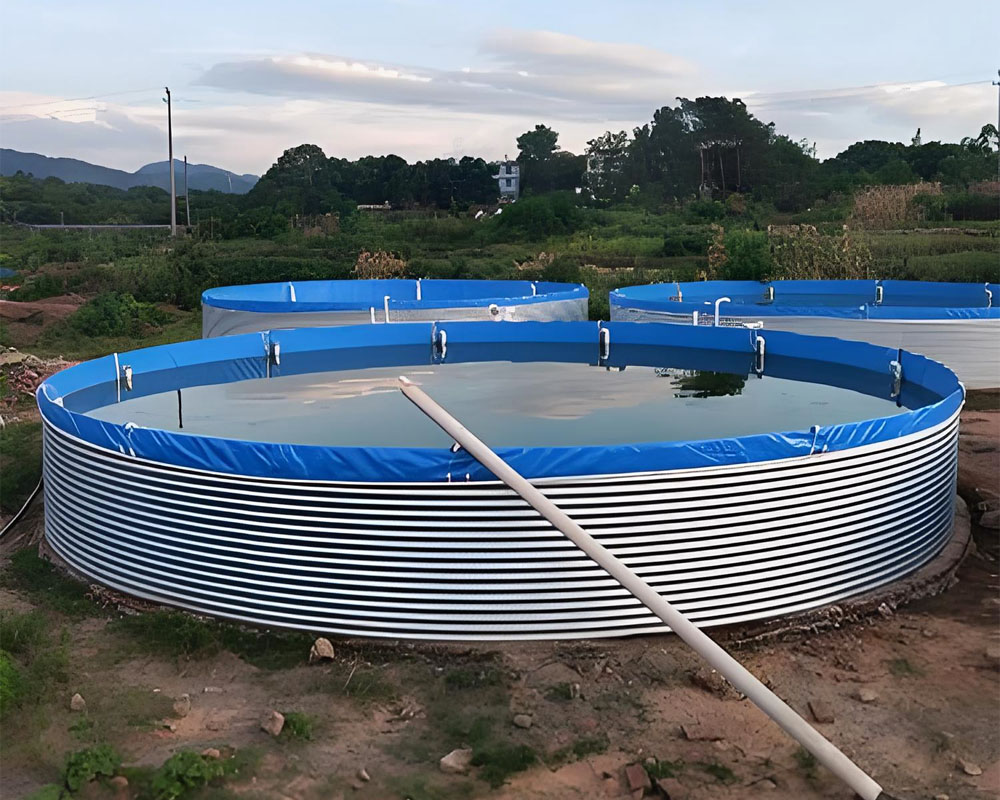

Corrugated Irrigation water storage tanks are essential components in agricultural and landscaping systems, providing a reliable water supply when natural sources are insufficient. Here's a breakdown of their purpose, types, design considerations, and key benefits:
Common Tank Types
| Type | Pros | Cons | Best For |
|---|---|---|---|
| Polyethylene | Lightweight, affordable, corrosion-resistant | Limited size (≤50k L), UV degradation | Small farms, gardens |
| Fiberglass | Durable, chemical-resistant, modular | Higher cost, complex installation | Harsh environments, chemicals |
| Steel (Bolt-up) | Strong, customizable, large capacity | Corrosion risk, maintenance needed | Large-scale agriculture |
| Concrete | Long lifespan, fire-resistant | Expensive, permanent installation | Permanent high-volume needs |
| Flexible Bladders | Portable, low-cost, quick setup | Vulnerable to punctures, shorter life | Temporary/seasonal use |
Key Design Considerations
- Capacity Calculation:
*Tank Size = Daily Water Use × Days of Autonomy × 1.2 (safety margin)*
*(e.g., For 5,000 L/day needing 7-day supply: 5,000 × 7 × 1.2 = 42,000 L)* - Critical Components:
- Lining: Food-grade for potable water; reinforced for durability.
- Filtration: Screen filters (≥200 micron) prevent clogging.
- Overflow System: Manages excess water during heavy rain.
- Access Points: For cleaning/inspection (avoiding stagnation/algae).
- Insulation: In cold climates to prevent freezing.
- Placement: Elevated tanks (>3m height) enable gravity-fed systems, reducing pump costs.
Top 5 Maintenance Tips
- Inspect for leaks/corrosion quarterly.
- Clean sediment annually.
- Check insect/rodent screens monthly.
- Treat algae with hydrogen peroxide (not bleach!).
- Winterize pipes/tanks in freezing climates.
Cost-Saving Innovations
- Rainwater Harvesting: Capture runoff from roofs/barns (saves 30–50% municipal costs).
- Solar-Powered Pumps: Pair tanks with solar to reduce energy bills.
- Smart Sensors: Monitor levels/leaks via apps to prevent waste.
Need help choosing? Consider:
- Water Source (well, municipal, rain?)
- Irrigation Area Size (ha or acres?)
- Budget (incl. installation/filtration)
- Local Climate (freeze risk? UV exposure?)
Let me know your specific scenario for tailored advice! 🌾💧